

The Numbers Tell the Story
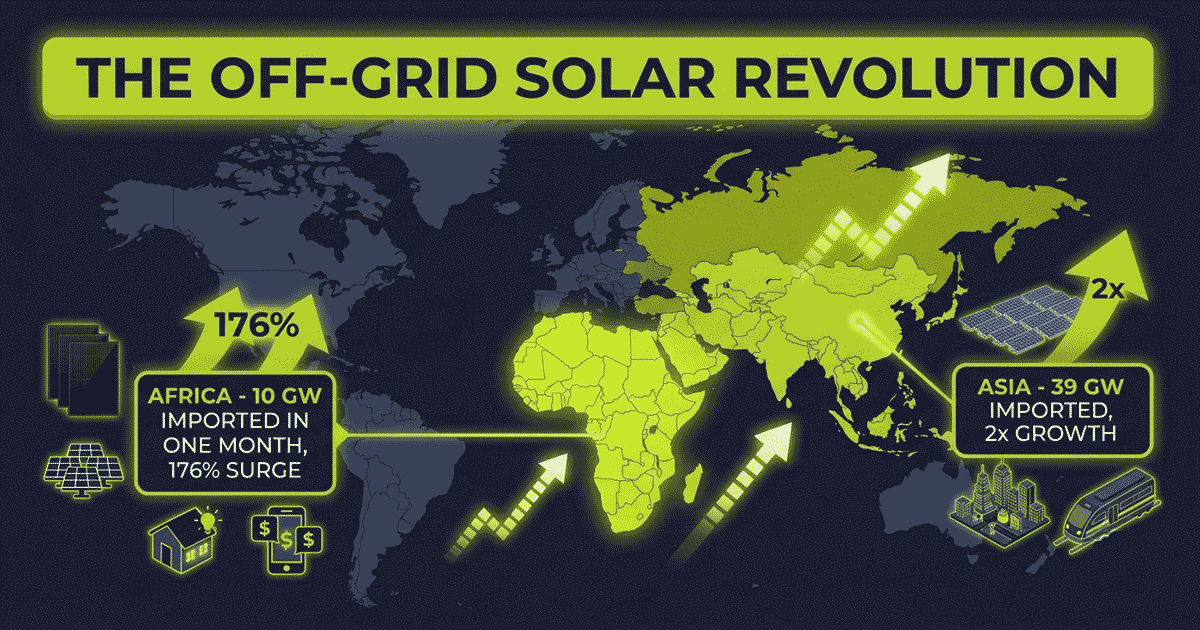
Africa's solar panel imports surged 176% in March 2026 compared to the previous month, reaching 10 GW in a single month. Asia's solar imports doubled to 39 GW in the same period. These aren't incremental gains — they represent a fundamental shift in how developing economies approach energy access.
Nigeria imported over 1.2 GW of solar technology for the first time in a single month. Kenya reached 1.4 GW. Ethiopia hit 1.1 GW. These countries are building solar capacity faster than anyone predicted.
What's Driving the Boom
Grid limitations: An estimated 600 million people in Africa and 200 million in Asia still lack reliable electricity. Grid extension costs $15,000-$50,000 per kilometer, making off-grid solar the only economically viable option for rural electrification.
Falling costs: Solar panel prices have dropped over 90% in the past decade. A complete home lighting system that cost $500 in 2015 now costs under $100. Chinese manufacturers are producing panels at $0.10-$0.15 per watt — making solar cheaper than any fossil fuel alternative.
Mobile money: Pay-as-you-go (PAYG) solar companies have cracked the affordability barrier. Customers pay small daily amounts via mobile money, making solar accessible to households earning $2-5 per day.
Policy support: Governments across Africa are removing import duties on solar equipment, creating favorable regulatory frameworks, and setting ambitious renewable energy targets.
Market Opportunities
The off-grid solar market in Africa and Asia is projected to exceed $10 billion annually by 2028. Key growth segments include solar home systems (lighting, phone charging, TV and fan), productive use applications (irrigation pumps, grain mills, cold storage), commercial solar (shops, clinics, schools, telecom towers), and mini-grids serving village clusters.
For manufacturers, distributors, and dealers, these markets represent the largest growth opportunity in the solar industry. Register as a manufacturer or dealer on OffGridPrime to connect with buyers in these high-growth markets.
Challenges and Solutions
Quality control remains a significant challenge. Low-quality products flooding the market erode consumer trust and damage the industry's reputation. This is exactly why platforms like OffGridPrime focus on connecting buyers with verified, certified manufacturers — ensuring quality products reach the customers who need them most.
Frequently Asked Questions
Which African countries have the highest solar potential?
The Sahel region (Mali, Niger, Chad, Burkina Faso) receives the highest solar irradiation globally — 5.5-6.5 kWh/m²/day. East Africa (Kenya, Tanzania, Ethiopia) and Southern Africa (South Africa, Mozambique, Zambia) also have excellent solar resources exceeding 5 kWh/m²/day.
What certifications should solar products have for African and Asian markets?
IEC 61215 for solar panels, IEC 62109 for inverters, and Lighting Global/VeraSol certification for solar home systems. Many countries also require national standards compliance. Working with certified manufacturers through OffGridPrime ensures compliance with international quality standards.
How can I become a solar distributor in Africa or Asia?
Start by identifying your target market and product categories. Contact OffGridPrime to connect with manufacturers offering dealer programs. Many manufacturers provide training, marketing support, and favorable payment terms for new distributors in emerging markets.